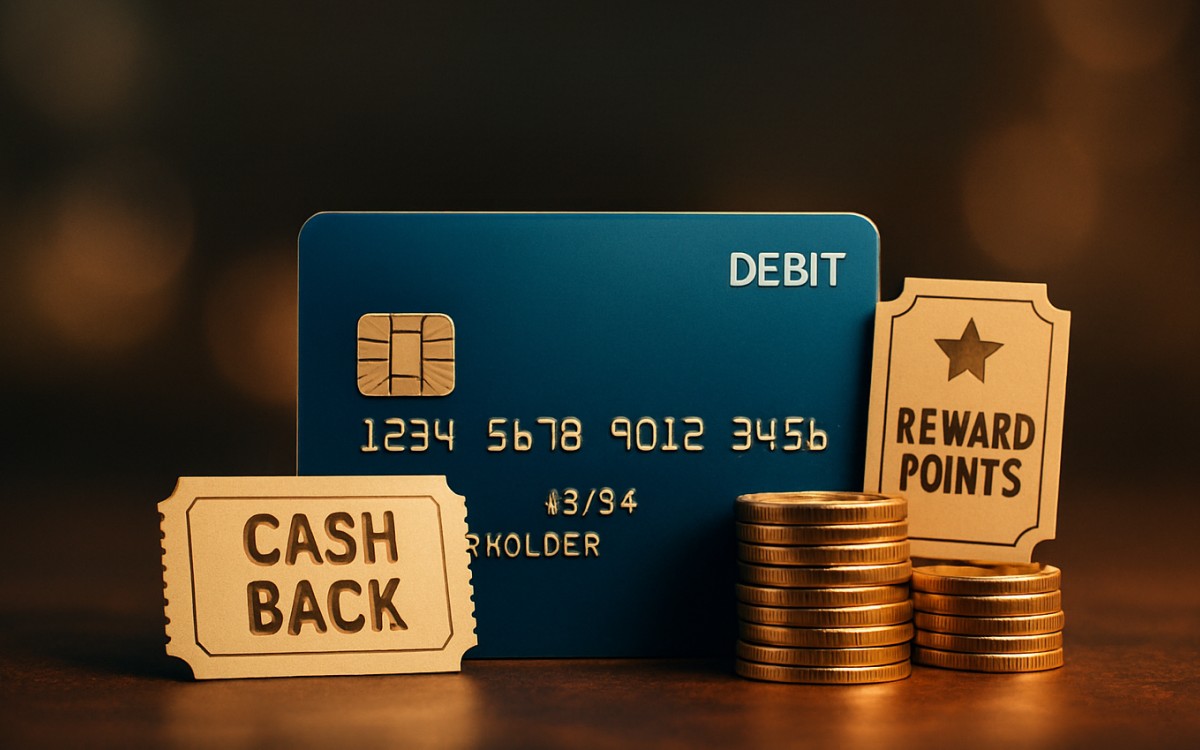
Every time you swipe, tap, or insert your debit card, there is a quiet question worth asking: Are you getting anything back from this? Banks have made it possible to earn while you spend, either through cashback or reward points, and both sound equally appealing on the surface. But they work very differently, and depending on how you spend, one is almost certainly going to serve you better than the other. Here is how to figure out which one that is.
Know What Cashback and Rewards Mean
Before comparing the two, it helps to understand what each one actually is and how it works in practice. The names are familiar, but the mechanics behind them are often glossed over.
What Cashback Really Means
Cashback is exactly what it sounds like. A percentage of what you spend is returned to you, either as a direct credit to your bank account or as a balance that offsets future spending. There is no conversion involved, no catalogue to browse, and no points-to-value calculation to figure out. You spend a hundred rupees, you get a few rupees back, end of story.
The percentage varies depending on the bank, the card, and sometimes the merchant or category. Grocery purchases might earn a different rate than fuel or online shopping. Some cashback offers are flat across all transactions, while others are tiered, meaning higher spending unlocks better returns. The simplicity is the main appeal, and for most people, that simplicity is genuinely valuable.
What Reward Points Actually Are
Reward points are a currency created by the bank. Every transaction earns you a certain number of points, and those points can eventually be redeemed for something, whether that is vouchers, merchandise, travel bookings, or, in some cases, a cashback equivalent. The earning rate is usually expressed as points per hundred rupees spent.
The catch is in the redemption. Points have an assigned value that varies depending on what you redeem them for, and that value is entirely determined by the bank. A point might be worth one paisa when redeemed for merchandise, but considerably more or less when used for travel or converted to cashback. Understanding this before accumulating a large balance is the kind of thing that saves a lot of frustration later.
Where Each One Shines
Neither cashback nor reward points is universally better. The right answer depends on your spending patterns, your patience, and how much attention you are willing to pay to the fine print.
When Cashback Works in Your Favour
If straightforward savings are what you are after, cashback tends to win. There is no expiry to worry about in most cases, no minimum redemption threshold to hit, and no guessing about what your earnings are actually worth. What you earn is what you get, and it goes directly back into your account or reduces your balance in a way that is immediately useful.
Cashback works particularly well for everyday spending. Groceries, utility payments, fuel, and regular online purchases all add up over time, and a steady cashback rate on these categories can result in meaningful savings over the course of a few months without any extra effort on your part.
When Reward Points Pull Ahead
Reward points tend to offer better value when they are redeemed strategically. If you are a frequent traveller, for instance, points that can be converted into flight bookings or hotel stays often deliver significantly more value per point than a straightforward cashback equivalent would. The same points that might return a modest amount as cashback could unlock a much larger benefit when applied to travel.
Points also tend to accumulate faster on premium debit card variants, where the earning rate is higher and the redemption catalogue is broader. For someone who spends consistently across multiple categories and is disciplined about redeeming before expiry, reward points can genuinely outperform cashback in terms of total value returned.
Hidden Details That Change the Calculation
Both options come with conditions that are easy to miss but important to understand. Reading through them before deciding which card to lean on can prevent a lot of disappointment down the line.
Expiry, Caps, and Minimum Thresholds
Reward points almost always come with an expiry date. If they are not redeemed within a set period, they are gone. Some banks also cap how many points can be earned in a billing cycle, which limits the upside for high spenders. Redemption often requires a minimum points balance, meaning smaller earners may wait a long time before they can use what they have accumulated.
Cashback offers have their own version of this problem. Many come with a monthly cap on how much can be earned, and some require a minimum transaction amount before the cashback kicks in. Spending below that threshold on every transaction means you are earning nothing at all, despite thinking you are.
Category Restrictions You Might Not Have Noticed
Both cashback and reward point offers are frequently tied to specific categories or merchants. A card that offers strong cashback on dining might offer nothing on groceries. A reward points card that accelerates earnings on travel bookings might give a fraction of that rate on everyday purchases.
If your actual spending does not align with the categories where your card performs best, you are leaving value on the table. It is worth mapping your typical monthly spending against the earning structure of your card to see whether the benefits are landing where your money actually goes.
Making the Decision That Works for You
At the end of it all, the better option is the one that fits your life rather than the one that sounds better on paper.
Match the Benefit to Your Spending Style
If you spend consistently across everyday categories and want something simple that works in the background, cashback is the more reliable choice. It rewards regular spending without requiring you to think too hard about accumulation or redemption strategy.
If you are a more engaged spender who tracks where money goes, takes advantage of specific categories, and has clear redemption goals in mind, reward points can deliver more total value. The effort required is higher, but so is the potential return for those who put it in.
Look at Both Before Settling on One Card
Many banks now offer debit cards that blend both benefits, with cashback on certain categories and reward points on others. Before settling on a card, it is worth comparing what is being offered across both structures and thinking about which one your spending will naturally activate more often.
A card that looks impressive on a brochure but earns most of its benefits in categories you rarely spend in is not actually a good deal for you, regardless of how generous the headline rate appears to be.